
“The Millionaire Next Door” - What Does Success in the Entertainment Business Really Look Like?
Wealth is invisible — especially in an industry built on titles, appearances, and perception.

Entertainment is one of the most image-conscious industries on the planet. I don’t think I’m exaggerating here. Titles, cars, houses, vacations, where you’re meeting for dinner — it’s a business built on perception. So when I saw a woman talking about the book “The Millionaire Next Door” on social media, I dropped what I was doing (scrolling) and immediately downloaded it. Great choice. I skimmed through it and it stopped me right in my tracks. The woman was right, this is a 9+ out of 10. I always heard this book was one of the top financial books to read, and it’s been on my list of “to read” for too long. I can now check this off my “book bucket list!”
Confession up top: I didn’t publish last week. It was my birthday week, and I told myself I was “busy.” A friend called me out on it — if I say I’m publishing every week, then I publish every week. She’s right. Lesson learned. Onward!
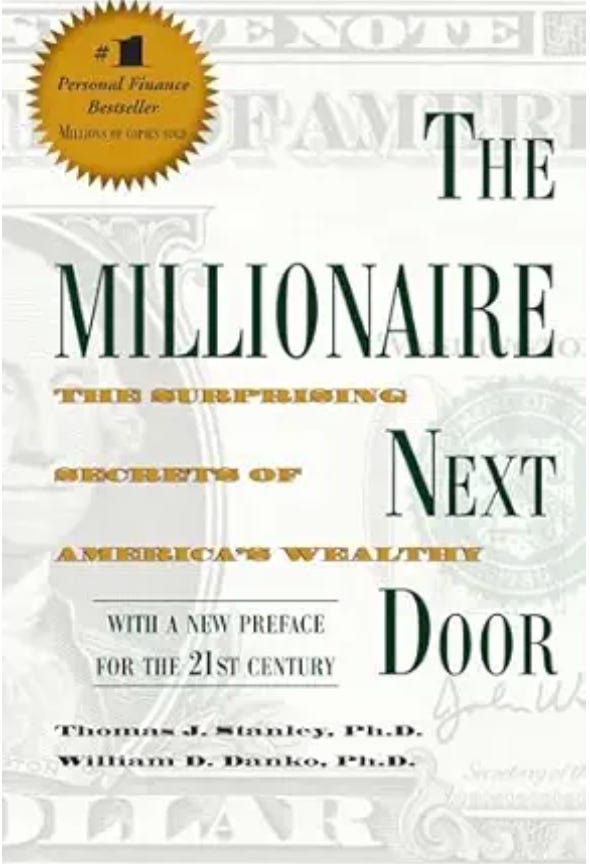
Back to the book - here’s a short summary, for anyone who hasn’t read it: “The Millionaire Next Door” by Thomas J. Stanley and William D. Danko (originally published in 1996) turns the common idea of wealth upside down. Based on years of research, the authors found that many millionaires don’t live flashy lifestyles — they often drive practical cars, live in modest homes, and build wealth by consistently spending less than they earn, saving, and investing over time. The book’s biggest message is that real wealth isn’t about looking successful; it’s about creating financial freedom.
It has nothing to do with career strategizing on my part. But looking back, it turns out I’ve apparently been operating by most of these rules for years without reading the book. Who knew?!
Titles Tell Nothing About Someone’s Finances
In this (and many other types of) business, people get impressed by titles fast. President of a label. Head of a company. Big agent, big producer, big executive — and suddenly everyone assumes that person has it all figured out.
We don’t know that. We don’t know their debt, their spending, whether they have a dollar saved or invested. A big title is not the same thing as financial stability. Someone pulling in millions can be completely underwater. Someone making a normal salary can be quietly building a huge nest egg. I don’t assume that a person is a big baller just because they’ve got the title or are famous, have a Lambo or Mercedes G-Wagon, or dress fancy.
There Are Two Careers
There’s the job everyone can see, and there’s someone’s actual financial life. Those are two different scorecards, and this book made this so clear to me. A person can have an incredible résumé and be a financial mess. They can have a completely ordinary job and be sitting on good investments.
This matters even more in entertainment because nothing here is stable. Jobs end. Companies restructure. People lose their seats overnight. Artists fall out of favor. I know this personally — my own career has gone up, down, around, and up again. Director. Then to VP. Then to the next project. A financial life has to exist on its own, separate from whatever title someone is carrying this year, because that title can disappear a lot faster than one can think.
Your Job is Not Your Identity
I started working in this business as a teenager — interning on TV shows in high school, part-time jobs doing everything from transcription to production assistant, then landing a job at Power 106 Radio in Los Angeles when I was around 17 or 18 years old. I was so young! And I really didn’t have any experience in business or money matters. Crazy how time flies!
But somewhere along the way I learned that my job was not who I am. It’s a part of what I do.
When you lose a title in this business, it can feel like you’ve lost a piece of yourself — especially in an industry where identity can get so tangled up with what we do for a living. I’m here to tell you it’s not. Your knowledge, your relationships, your judgment, your reputation — those are the important parts that stay with you. They compound, just like an investment account, whether you’re employed at the moment or not.
In fact, I was discussing this exact thing with a friend who I’ve known since we both started in the radio business — this was such a long time ago and he’s still one of my dear friends. How lucky am I?
Reputation Compounds Like An Asset
Another one of my oldest friends taught me something early in my career without even meaning to. He now runs one of the biggest record labels, and there are many reasons why. He’d ask me things like, “Hey, do you mind if I expense this lunch?” Small stuff. Is that important? No, not really, but that’s the way he operated and still does. It was the first time I saw anyone modeling that kind of transparency, integrity, and respect. I started doing it too, not perfectly, but doing it. I’ve heard a few major artists say he’s the only person they’ll work with in this business, and I understand why. It doesn’t matter what his job title is — he acts from a place of values and integrity, and that’s what matters.
People watch how someone works — whether they’re reliable, whether they listen, whether they keep their word. That builds trust, and trust is the thing that actually compounds in this business. When someone refers a person for a project or a job, they’re putting their own reputation behind them. That is an enormous act of trust and should not be taken lightly.
Lifestyle Inflation Is The Trap Nobody Names
This industry basically trains people to inflate their lifestyle. The raise comes, the deal comes, the bigger client comes — the apartment gets bigger...then the house, then the car, then the trips, then the dinners that aren’t even enjoyed but somehow keep happening. I did some version of that when I was younger. More money came in, so I spent more. Nobody sat me down and explained that earning money and building wealth are two completely different skills. I had to learn over the years.
It’s not that buying nice things is the problem. The problem is treating every raise like it requires a matching upgrade in how you live.
You Don’t Have To “Look Rich”
Some of the wealthiest and most brilliant people I’ve met in this business look completely normal. What does “normal” even look like nowadays anyway? Basically, they don’t advertise their wealth. I know people with seriously insane money who still drive a car that’s unremarkable, still down to earth, generous, and low-key. And I also know people who’ve made hundreds of millions of dollars and blown through nearly all of it. From the outside, it would be impossible to know which one is which.
Quiet Confidence
I’m all about success. I’m all about nice things, good trips, and beautiful homes. However, I don’t need the Rolex, the Porsche, or the Birkin to make me who I am. Anyone can buy those things if they actually want them. That’s not the point. The point is not confusing luxury with wealth. I’m against the idea that success has to be performed for other people.
Quiet confidence comes from knowing your own values and not needing your possessions to explain your worth to a room. It also comes from actually having something saved — because that’s what gives you real freedom.
Money Buys Options, Not Stuff
The real value of money isn’t what it purchases — it gives options. The freedom to leave a job that’s toxic. To say no to the wrong job. To survive the gap between jobs. To start a business. To take care of family. To change industries and businesses. To take time off. That’s real wealth, and it has nothing to do with what’s parked in a driveway.
Not being desperate changes every decision you make. It changes the vibe of every room you walk into.
Learn This As Early As Possible
Nobody explained finances, money management, or investing to me. It just wasn’t a conversation, at least not one I was in the room for. I’m making sure that’s different here and now. And for my son. He’s sixteen, just got his first job at Trader Joe’s, and we talk openly about money. Track what comes in, track what goes out, understand the habits, save, and learn how investing actually works. Not perfection — just awareness, starting now.
The Richest Person in the Room Isn’t Always Obvious
Entertainment and social media constantly sell one version of success: clothes, jewelry, money, houses, cars, access. But is that what wealth is really about? It might feel good for a moment, but it's stuff — and stuff says nothing about the person behind it. Everyone gets to decide what success actually means for them, and that can happen at any point in a career. It starts by making it a conscious choice and living it every day. Not everyone wants the same thing, and it's important to understand what you stand for.
For me, success is spending time with my son, doing work that is meaningful, being there for my friends, sleeping well, going on adventures, and being generous and kind. That's what wealth looks like to me. Everything else is just gift wrap.
Build Optionality & Freedom, Not Just Wealth
I’m not a financial planner, and this isn’t investment advice. I’m not here to promote this book and this isn’t sponsored, but I believe “The Millionaire Next Door” is a must-read for anyone, whether they’re 20 or 50+. There are serious life lessons here, no matter where one is in life or career.
Financial freedom isn't about never working again. It's about being able to choose your next move without letting fear make the decision for you.
The best time to plant a tree was twenty years ago. The second-best time is now.
Jacquie
P.S. — This must be a book month, because I’m also polishing off
“The Creative Act: A Way of Being” by Rick Rubin. It was a birthday gift from a dear friend of 25 years — an amazing, award-winning director and cinematographer who I highly respect and admire. Such a good book and great gift. Rick Rubin has a way of making us think differently about creativity. Brilliant book. I’ll be back with thoughts on this one too. SO GOOD.

Disclaimer: This article reflects my personal observations and experiences. It is intended for educational and informational purposes only and should not be considered financial, legal, tax, or investment advice.