

On May 20, 2026, the company that has protected the Peanuts music catalog since the 1960s went on a one-day copyright lawsuit blitz.
Four federal lawsuits. Filed the same day.
Four. In one day.
Lee Mendelson Film Productions — the family-owned company founded by the late Lee Mendelson, the man who actually wrote the lyrics to “Christmas Time Is Here” — has owned and protected Vince Guaraldi’s Peanuts music catalog for over sixty years.
They sued a video game publisher, an auction house, a belt company, and the United States Department of the Interior.
Yes. A federal agency. Sued. Over “Linus and Lucy.”
This wasn’t sloppy — it was coordinated.
If you’ve ever wondered whether copyright law actually gets enforced, or whether the loose saying “everybody does it” (i.e., uses music without paying for it) holds up as a legal excuse — this is your answer.
Quick Clarification: “Peanuts” Characters vs the Music
Lee Mendelson Film Productions (LMFP) is not the same thing as Peanuts Worldwide LLC. Peanuts Worldwide owns the characters — Charlie Brown, Snoopy, and the whole gang. LMFP owns the music. Two completely separate companies, two completely separate sets of rights. This happens more than anyone would like to admit. You can legally license Snoopy’s face—but get sued for the music underneath it without prior permission. In this situation specifically, this very important distinction can confuse people and the organizations they work for, and it’s exactly the kind of thing that gets companies sued.
The Four Lawsuits + The Breakdown
The U.S. Department of the Interior used Guaraldi’s arrangement of “O Tannenbaum” from A Charlie Brown Christmas as background music for a digital holiday card posted across their official social channels. No license.
A federal agency just... used it.
Which tells you this isn’t a “small company mistake” problem—it’s an “everyone assumes it’s fine until it isn’t” kind of problem.
GameMill Entertainment, the publisher behind 2025’s Snoopy & The Great Mystery Club, had properly licensed the characters from Peanuts Worldwide. But instead of also licensing the music from LMFP, the lawsuit alleges they hired composers to write tracks that sound suspiciously close to “Linus and Lucy” and “Skating” — close enough that players would think they were hearing the real thing. That’s not an oversight. That’s a workaround that every professional in this business recognizes. LMFP is seeking at least $300,000 in damages on this one alone.

Heritage Auctions used “Linus and Lucy” in Facebook and Instagram social media promo videos to hype an upcoming auction of vintage Peanuts collectibles. They used the music to sell Peanuts merchandise without paying the people who own the Peanuts music.

Buckle-Down Inc., a belt and apparel company that already makes licensed Peanuts products, used the theme song in their social media ads — without the separate sync license that this would require. They had the character license. They didn’t have the music license. Two different rights.
Across all four, LMFP is seeking damages and a permanent injunction to pull the music immediately.
Stephen Colbert + CBS/Paramount+ In The Mix
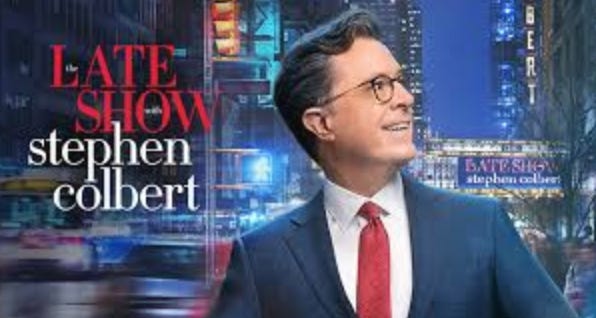
Shortly after the lawsuits broke, Stephen Colbert brought this news story up on The Late Show. Mid-bit, his house band — Louis Cato & The Great Big Joy Machine — started playing “Linus and Lucy” live on air. Colbert looked at the camera and joked something like, “Oh no, I hope this doesn’t cost CBS any money.”
Oops. It did.
LMFP caught the broadcast. They thought it was funny too — and they enforced the copyright. CBS had to sign a licensing agreement and pay up, with the settlement officially wrapping up on June 16, 2026 — less than a month after the original filings. In a genuinely classy move, LMFP turned around and donated the entire settlement to José Andrés’s World Central Kitchen.
LMFP’s chairman, Jason Mendelson, put it plainly: their enforcement strategy is partly about educating people on the need for written license agreements before using music commercially.
Why Isn’t This in the Public Domain by Now?
Some of you might be wondering, so let’s clear it up: Guaraldi’s Peanuts music is from the 1960s — why isn’t it free to use after all this time?
Here’s the rule: in the United States, corporately-owned copyrighted works enter the public domain 95 years after publication. Either way, Peanuts music isn’t close to that line. This music stays fully protected for decades. So if someone tells you, “It’s old enough, it should be free by now,” they don’t understand how copyright law actually works. Or it’s wishful thinking. This misunderstanding is exactly how you end up named in a federal lawsuit next to the Department of the Interior.
Looking at This From Both Sides
I’ve spent thirty years in this business — on both the licensing and supervision sides, plus the “I need this exact song, but it’s going to be a problem” side.
Here’s both sides:
From the rights holder’s side (Publishers and Master Rights):
I understand the aggressive posture to protect the works. Iconic catalogs get targeted because they’re iconic — they deliver instant nostalgia, and plenty of people assume a track this famous and old is somehow exempt from the copyright laws everyone else follows. It’s not. They’re protecting a legacy catalog; they owe it to the composer’s estate and the integrity of the work to enforce those rights. I’ve worked with libraries that are incredibly strict about clearance, and frankly, I understand exactly why.
From the music users’ side (Licensees):
It’s not usually some master plan to dodge licensing. And, sometimes it is.
Here’s how this usually happens: someone on a marketing team is told to post social media content for their company. If they haven’t been taught how licensing actually works, they don’t realize that using music in marketing or promotional content requires permission.
Most platforms have their own licensing deals—but those don’t automatically cover commercial use for brands. Sometimes a company has a blanket license or an in-house library. Sometimes they need a custom track. Then they need to license it properly.
Just because someone in the company doesn’t know they need to license music isn’t an excuse. Not knowing doesn’t protect the organization—but it does mean education matters just as much as enforcement. That’s why companies that use music in-house need to hire music licensing professionals to ensure the integrity of the project is done right. Then they won’t be sued for more money than if they had just licensed it in the first place.
That’s why LMFP’s chairman framed this as partly educational. And it’s exactly why I do what I do. Learn from this so you’re not next.
Part 2 next Friday: I’m breaking down exactly what to do—step by step—whether you’re the one sending the letter or the one receiving it.
Same time, same place.
— Jacquie Lucky
@jacquieslucky
This Is Your Lucky Break by Jacquie Lucky
New every Wednesday and Friday.
If someone in your world needs to hear this, feel free to forward it.
Subscribe >> https://substack.com/@thisisyourluckybreak
@thisisyourluckybreak
For deeper reporting on music industry news like this, visit:
American Music + Media — where I serve as Publisher and Editor-in-Chief.
Subscribe >> amusicmedia.com
@americanmusicmedia