

Just joining the crew? This is Part 3 of a 4-part series. Part 1 covered the non-existent industry rate card and the five things that move the number. Part 2 broke down advertising, gaming, sports and a surprise — the top-tier money categories. Catch up at thisisyourluckybreak.com.
One thing I’ve learned after years of supervising productions is that everyone walks into the room with a different definition of a “good deal.” Producers are protecting a budget. Artists are protecting their work. Publishers are protecting value. My job is to find the song that serves the story while making sure everyone can walk away feeling they were treated fairly.
That’s a lot harder than it sounds. After years of doing it, I’ve noticed a few patterns.
It also changes how I look at network television, streaming, backends, and licensing in general.
Who said music supervision was sexy?!
Network + Cable Television + the Backend
One thing that always makes me smile is when artists get excited because I say “Netflix.” But actually, network television is usually a better medium for music. Those aren’t always the same conversation financially for an artist.
Network TV — ABC, NBC, CBS, Fox — is good money. But here’s the part some people don’t know or get confused, and it’s the part that matters most over time:
There are backend royalties from network placements. That’s one of the biggest advantages of broadcast television.
When I find out a project is headed to network television, I think: what’s the music budget today, and what kind of long-term income could this placement generate for the artist?
When music airs on a broadcast network, it’s considered a “public performance” and the PRO — ASCAP, BMI, or SESAC — collects performance royalties every time that episode airs. That’s recurring passive income. That track works long after the deal is signed and the upfront check is cashed. A show that runs for multiple seasons, gets picked up in syndication, or airs internationally can keep generating royalty income for years.
But here’s the catch: payment only happens if the paperwork is flawless. There can be absolutely no mistakes. If the production company forgets to file the cue sheet—the official document listing every song used in an episode—then the PRO won't know the performance exists or the use exists. And that’s a horrible situation to be in, and I just spoke recently to a composer about something very similar.
If I could teach every artist, composer, or songwriter one boring topic, it would be cue sheets. Yes, I said it. And thanks to BMI for this example:
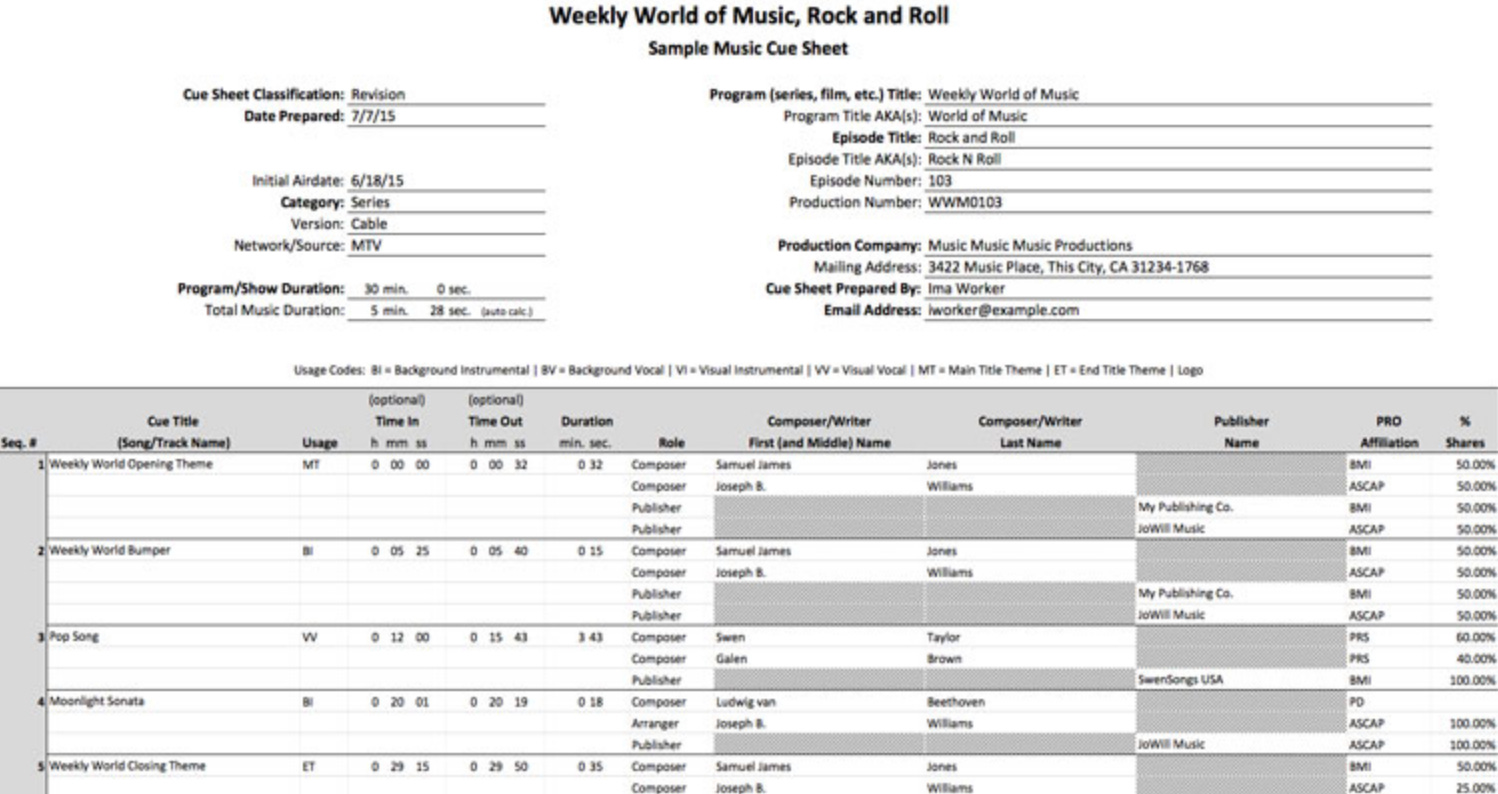
Nobody gets excited about cue sheets (except my friend Dawn!).
Everybody gets excited about getting paid, though.
I’ve seen far too many people assume everything was handled, only to discover months or even years later that a cue sheet was never filed or contained errors. If one small detail is wrong, it can delay or even prevent payments altogether.
My thoughts on this? Follow up. Then follow up again. Confirm the cue sheet was submitted correctly while the placement is still fresh. I’ve had clients spend weeks and years (yes, years!) tracking down missing cue sheets years later, and trust me—that’s a headache no one wants.
One of the first lessons I learned early in my career is that cable and network television produce very different royalty outcomes.
Cable television royalty structure is different and often generates significantly lower, if any, backend income than broadcast television. This completely changed how I thought about the relative value of a network placement versus a cable placement — even when the upfront fees look similar.
Here’s another scenario: if a network show ends up streaming on, let’s say, Hulu or Netflix, the nature of the “performance” changes from broadcast to digital transmission. Which is not the same type of broadcast performance money every time someone hits play. They’re covered under a different royalty structure. It’s just something to understand when looking at the long-term value of a placement.
Streaming OTT (Netflix, Amazon, Apple TV++)
I’ve lost count of how many times someone has called me after landing a Netflix placement, expecting life-changing money. I’ve worked on productions that streamed on Netflix, and I’ve seen the numbers firsthand. Sometimes it is. Sometimes it isn’t.
Here’s the myth: Netflix is a global platform with hundreds of millions of subscribers, so the sync fees must be massive.
Not necessarily.
I’ve licensed music for productions that streamed on Netflix, and some of the fees were far more modest than people imagine.
One thing that's easy to overlook is that the Netflix logo doesn't tell you how a project was financed. Many Netflix Originals are produced by independent production companies with their own budgets, which means music spending can vary dramatically from one show to the next. A general overview includes the producers, showrunners, in-house music supervisors, and legal departments, who all have a say in how that budget gets spent. A hit series with a healthy music budget is a very different conversation from a smaller production that might only get (let’s say) $20,000 for music for the entire project, even though both carry the Netflix logo.
From my experience, here’s how these deals typically break down for independent and mid-level artists, assuming standard worldwide, all-media, perpetual rights — which is what OTT platforms typically require because of how global distribution works:
Background or source music — music playing from a car radio, a jukebox, faintly in a club scene — on average runs $500 to $5,000 per side.
Featured or montage placements — where the song is actively driving a scene, an emotional sequence, or an action moment with real screen presence — can range from $2,000 to $45,000 per side.
Episodic theme songs — the main title theme heard at the beginning of each episode — are rarer, but when they happen, they average $20,000 to $75,000 or more. If an indie track perfectly captures a show’s identity, a showrunner may choose it over a legacy recording specifically to preserve budget. Or if a showrunner falls in “temp love” with a track, they might need to “get” the producers to allocate the cash to pay for it.
Unlike traditional broadcast television, the long-term backend opportunities are often much more limited, so it’s important to understand exactly what rights are being licensed and what the return is.
The “Stranger Things” Effect
One thing that can change the picture dramatically is who owns the music.
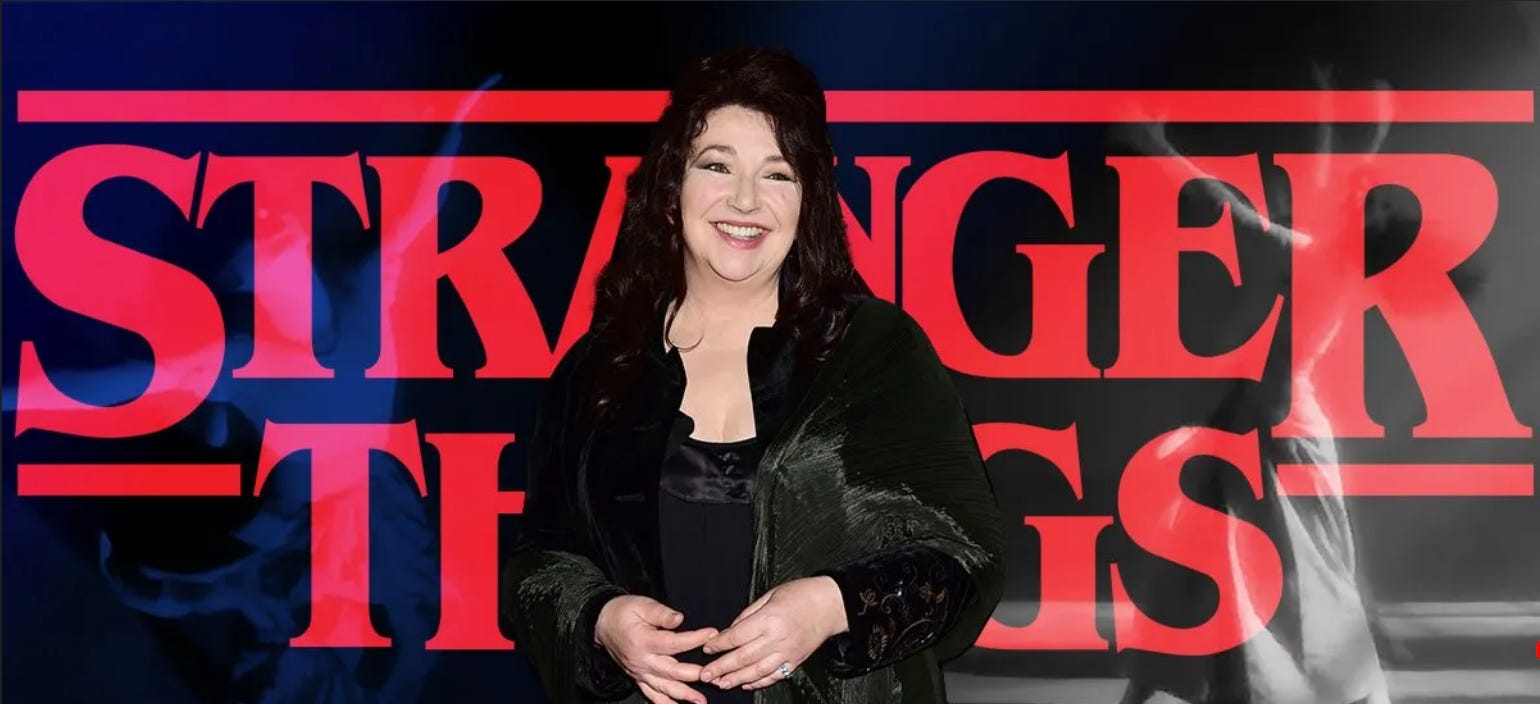
When Kate Bush’s “Running Up That Hill” was used as a plot-driving force throughout Stranger Things Season 4 in 2022, the song hit #1 on the Billboard Global 200 and crossed a billion Spotify streams. Because Bush controls both her master recordings and publishing through her own company, she reportedly earned millions from the song’s resurgence after the series aired.
Metallica’s “Master of Puppets” — featured in the same season in that unforgettable Eddie Munson scene — had a similar moment. Because Metallica also owns its masters, the band’s income stayed largely in-house.
These are outlier examples — nobody knows when lightning like that will strike. But they illustrate something crucial: the artists who capture the greatest financial upside from a viral moment are usually the ones who own their work.
Wrapping It Up
At the end of the day, through all the projects and negotiations I’ve been part of, I still come back to the same thought. Every placement has its own business reality, but every one represents an opportunity for a song to find its audience. Sometimes that’s a network television show. Sometimes it’s a Netflix series. Sometimes it’s a production library, an indie film, or a commercial. You just never know which one will connect in a way nobody expected.
The thrill of finding and placing the right piece of music to help bring a story to life is worth every moment. When that happens, a little magic takes over.
I’ve learned that some of the greatest opportunities don’t come with the biggest upfront check, and some of the biggest platforms don’t always produce the biggest payday. But I’ve also seen what can happen when the right song finds the right home. Nobody could have predicted what happened with Kate Bush’s “Running Up That Hill” after Stranger Things. I’ve loved that song since it first came out! It’s also a reminder that great music can find a whole new audience decades later. That’s part of the magic of this—you never really know what’s around the corner.
Thanks for spending a little time with me this week. Until next Wednesday... have a Happy and Safe Fourth of July weekend!
— Jacquie Lucky
Next Wednesday, it’s all about film. We’ll talk rights, deals, and what I’ve seen change in production since COVID and the strikes. I’ll also share a few things I’ve learned after years of watching projects make the long journey from script to screen. I’d love to pull back the curtain on that… 😉 I look forward to seeing you then!
This Is Your Lucky Break | thisisyourluckybreak.com
@thisisyourluckybreak
New every Wednesday.
For deeper reporting on music industry revenue trends, publishing data, and sync market analysis, visit American Music + Media — where I serve as Publisher and Editor-in-Chief.
Subscribe >> amusicmedia.com
So glad I came across this! Thank you for sharing 🔥
Thanks for sharing your insights :) You're so right in pointing out that no one known when lightning will strike. Syncs are an opportunity and part of the puzzle, but not a silver bullet just like other avenues (e.g. playlists, digital advertising) are just one part. You never know how much of a moment a sync will give to your music, but ensure you have fresh content coming out, invest a little bit in advertising and also - consider releasing new music just before the sync goes live as this will help lead new listeners to more of your music.